




When a weapon of crime is not a gun or a knife, but a laptop, fake invoices, and an Excel sheet, the crime becomes far more dangerous than a common robbery. White-collar crimes hollow out the very foundations of the nation's economy. A massive economic mega-scam has just been unearthed in Uttar Pradesh, sending shockwaves through the Goods and Services Tax (GST) department. The Meerut GST Scam is a classic tale of modern financial fraud, where three masterminds sitting in the posh localities of Delhi spun an intricate web of 37 shell companies to siphon off a staggering ₹293.68 crore from the government treasury.READ ALSO:-मेरठ कोर्ट का बड़ा फैसला: 37 फर्जी कंपनियां, 293 करोड़ की GST चोरी! 'सफेदपोश' अपराधियों की जमानत खारिज, जानिए कैसे बुना गया था लूट का जाल
\r\n\r\n\r\n\r\n
However, the long arms of the law eventually caught up. The Directorate General of GST Intelligence (DGGI), Regional Unit Meerut, launched a highly coordinated surgical strike that completely dismantled this fake billing syndicate. On March 17, 2026, the Additional Sessions Judge (Court No. 01) in Meerut, Shri Mohammad Aslam Siddiqui, delivered a historic and stern verdict. The court completely rejected the bail applications of the three main accused—Abhishek Jain, Samyak Jain, and Ankur Jain.
\r\n\r\n\r\n\r\n
This article provides an in-depth analysis of the entire ₹293 crore Input Tax Credit (ITC) fraud, the meticulous investigation by the DGGI, the heated courtroom debates, and the crucial Supreme Court precedents that ultimately sealed the fate of these financial fraudsters.
\r\n\r\n
 LIVE नीला ड्रम केस में मुस्कान और साहिल दोषी करार: सौरभ राजपूत की हत्या में कोर्ट ने फैसला रखा सुरक्षित, 15 दिन बाद सुनाई जाएगी सजा
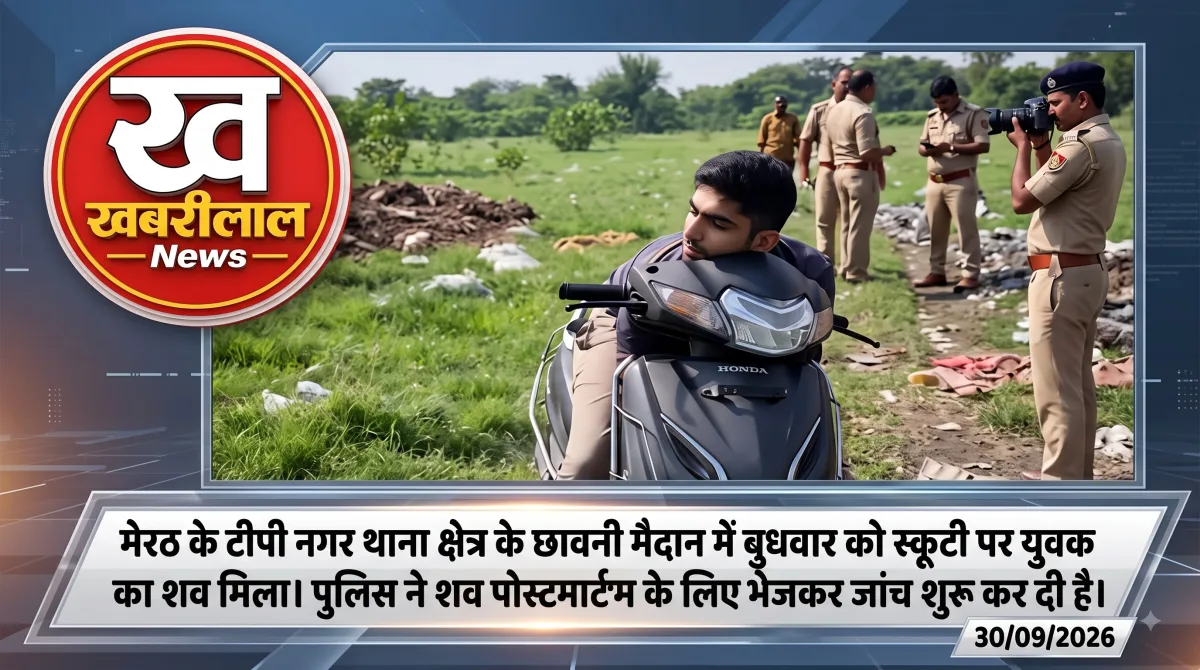 मेरठ के छावनी मैदान में स्कूटी पर मिला युवक का शव: राहगीरों की सूचना पर पहुंची पुलिस, परिजनों ने जताई हत्या की आशंका; पोस्टमार्टम से खुलेगा मौत का राज
 मेरठ नीले ड्रम हत्याकांड में फैसले का दिन: अधिवक्ता बोले- मुस्कान-साहिल ने योजना बनाकर सौरभ की हत्या की, नशीली दवा देकर किया था बेहोश
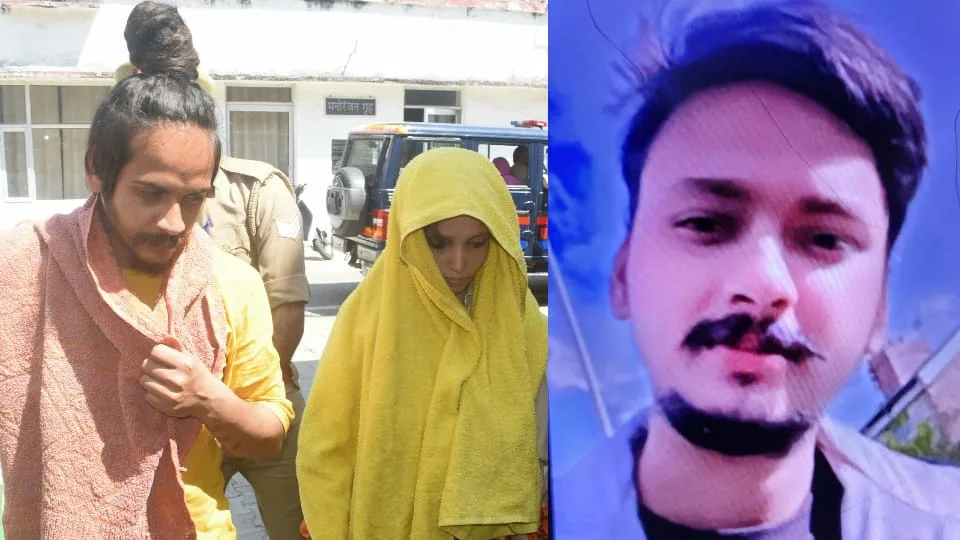 नीला ड्रम केस में आज आ सकता है फैसला: 126 पेशियां, 22 गवाह और 13 महीने की सुनवाई; जानिए सौरभ हत्याकांड में उस रात से अब तक कोर्ट में क्या-क्या हुआ
(Internal link to related article: The Rise of Cyber and Economic Crimes in Uttar Pradesh: How Authorities are Cracking Down on Digital Fraud)
\r\n\r\nFollow the Khabreelal News channel on WhatsApp Join › \r\n\r\n
Who Are the Masterminds Behind the Fraud?
\r\n\r\nThe roots of this high-tech economic offence are deeply embedded in the national capital, Delhi, but its illicit branches spread all the way to Meerut, Uttar Pradesh, and even the distant Andaman and Nicobar Islands. The Meerut GST Scam was not orchestrated by ordinary thugs, but by highly educated individuals who understood the deepest loopholes of the Indian banking and taxation systems.
\r\n\r\n\r\n\r\n
Profiles of the Accused:
\r\n\r\n- \r\n
- \r\n Abhishek Jain (Son of Late Pradeep Jain) – Resident of Krishna Nagar, Delhi.\r\n \r\n
- \r\n Samyak Jain (Son of Late Pradeep Jain) – Resident of Krishna Nagar, Delhi.\r\n \r\n
- \r\n Ankur Jain (Son of Rajinder Jain) – Resident of East Azad Nagar, Vivek Vihar, Shahdara, New Delhi.\r\n \r\n
\r\n\r\n
These three individuals used their sharp intellect not for legitimate business, but to manipulate the GST framework. They exploited the digital nature of the tax system, hiding behind computer screens and dummy directors to execute one of the most organized tax evasions witnessed in recent times.
\r\n\r\n\r\n\r\n
The Anatomy of the 293 Crore Scam
\r\n\r\nAccording to the extensive investigation conducted by DGGI Meerut, the trio collaborated to build a fraudulent financial ecosystem. In this ecosystem, they showed business transactions worth thousands of crores on paper, without ever selling a single physical good or providing an actual service.
\r\n\r\n\r\n\r\n
- \r\n
- \r\n The Web of Shell Companies: The accused established a massive, complex network comprising 37 fake (shell) firms. These companies existed purely on paper and had no real-world business operations.\r\n \r\n
- \r\n Inflated Taxable Value: Through a series of circular trading and fake invoices, they managed to show an artificial taxable turnover of ₹2,156.57 crore among these bogus entities.\r\n \r\n
- \r\n Fraudulent ITC Generation: Based on this purely fictional trade, the accused generated a fraudulent Input Tax Credit (ITC) worth ₹276.16 crore. They then passed on this fake ITC to other operational companies in the market, allowing those companies to evade their legitimate tax liabilities.\r\n \r\n
- \r\n The Export Refund Game: The greed did not stop at fake ITC. The masterminds took the fraud a step further. Utilizing three specific dummy firms, they showed fake exports of goods on paper. Based on these non-existent exports, they fraudulently claimed and successfully received ₹17.53 crore in cash as 'export refunds' from the government.\r\n \r\n
\r\n\r\n
In total, the direct financial loss inflicted upon the state and central exchequer amounts to a massive ₹293.68 crore.
\r\n\r\n\r\n\r\n
Understanding the Modus Operandi: How Fake ITC Works
\r\n\r\nTo fully grasp the magnitude of the Meerut GST Scam, it is essential to understand how Input Tax Credit (ITC) fraud actually operates. The GST system allows businesses to claim credit for the tax paid on their purchases (inputs), which they can use to offset the tax liability on their sales (outputs). Fraudsters exploit this mechanism by creating fake purchase invoices to claim ITC without actually paying any tax.
\r\n\r\n\r\n\r\n
Mule Accounts and Dummy Directors
\r\n\r\nThe masterminds recruited poor and unaware individuals—such as daily wage laborers and rickshaw pullers—using their PAN and Aadhar cards to open multiple bank accounts. These individuals were designated as the 'dummy directors' or proprietors of the 37 shell companies. The investigation revealed that individuals named 'Nikhil' and 'Daljeet' were paid a regular monthly "salary" simply to lend their names to these fraudulent entities, keeping the real masterminds hidden from the authorities.
\r\n\r\n\r\n\r\n
The Operational Hub in Delhi
\r\n\r\nAccused Ankur Jain served as the operational facilitator and field-level manager for this entire syndicate. Operating out of the Laxmi Nagar and Shakarpur areas of Delhi, his primary responsibilities included:
\r\n\r\n\r\n\r\n
- \r\n
- \r\n Identifying and recruiting new dummy directors.\r\n \r\n
- \r\n Securing GST registrations and opening bank accounts in their names.\r\n \r\n
- \r\n Generating fake E-Way Bills and GST invoices worth crores of rupees without the actual movement of any goods.\r\n \r\n
\r\n\r\n
The Profit Margin: Selling Fake Bills
\r\n\r\nCriminals do not run such elaborate schemes for free. The investigation uncovered that the accused sold these fake invoices to genuine businesses looking to illegally reduce their tax burdens. In exchange for passing on the fake ITC, the syndicate charged a heavy commission ranging from 1% to 4% of the total bill value. Furthermore, Ankur Jain received a fixed monthly remuneration of ₹30,000 for managing the ground operations.
\r\n\r\n\r\n\r\n
The DGGI Crackdown: Unearthing the Digital Goldmine
\r\n\r\nWhen a syndicate conducts paper transactions exceeding ₹2,100 crore, it is bound to trigger the red flags embedded within the GST department's Artificial Intelligence (AI) and Data Analytics systems. The Directorate General of GST Intelligence (DGGI), Regional Unit Meerut, spent several months meticulously tracking the digital footprints of this network.
\r\n\r\n\r\n\r\n
On February 12, 2026, DGGI Meerut launched simultaneous search and seizure operations at the residential premises of the accused in Delhi and the registered addresses of the 37 shell companies. The raids exposed the entire operation. The addresses where businesses worth crores were supposedly operating turned out to be entirely non-existent or completely inactive.
\r\n\r\n\r\n\r\n
The Seizure of Crucial Evidence
\r\n\r\nThe authorities recovered a "digital goldmine" from the residences of the masterminds, providing undeniable proof of their direct involvement:
\r\n\r\n\r\n\r\n
- \r\n
- \r\n Banking Instruments: Officials seized 18 debit/credit and ATM cards, all issued in the names of the dummy directors, through which the fraudulent funds were routed.\r\n \r\n
- \r\n The Master Excel Sheet: A highly incriminating detailed 'Excel Sheet' was recovered from their computers. This sheet contained the net banking IDs, passwords, ATM card numbers, and PINs for all 37 shell companies, proving that the accused had absolute financial control over these fake entities.\r\n \r\n
- \r\n IP Logs and Wi-Fi Connections: Cyber forensic analysis conclusively proved that the GST returns for the three dummy firms (M/s NK IT Solutions, M/s R K Traders, and M/s Inspiretech Solutions)—which fraudulently claimed the ₹17.53 crore export refund—were filed using the home internet (Wi-Fi) connections and mobile phones belonging to Abhishek Jain and Samyak Jain.\r\n \r\n
Armed with this irrefutable evidence, the DGGI immediately arrested the three accused under Section 69(1) of the CGST Act, 2017.
\r\n\r\n\r\n\r\n
The Courtroom Drama: Defense Pleas vs. Prosecution Facts
\r\n\r\nOn March 17, 2026, the bail hearing for this high-profile case commenced in the court of Additional Sessions Judge Shri Mohammad Aslam Siddiqui in Meerut.
\r\n\r\n\r\n\r\n
Arguments by the Defense
\r\n\r\nThe defense counsels representing the accused vehemently argued for their innocence. They claimed that Abhishek, Samyak, and Ankur were falsely implicated and had been languishing in Meerut District Jail since February 13, 2026, without just cause.
\r\n\r\n\r\n\r\n
- \r\n
- \r\n Coerced Confessions: The defense alleged that the DGGI officials forced their clients to sign the Panchnamas (seizure memos) and statements under severe threat and coercion. They argued that these "voluntary statements" were obtained illegally and should be inadmissible in court.\r\n \r\n
- \r\n Lack of Independent Witnesses: The lawyers contended that no independent witnesses were present during the arrests and seizures, claiming the department only used its own official witnesses.\r\n \r\n
- \r\n Flight Risk Denial: Attempting to gain the court's sympathy, the defense highlighted that the accused hail from a "reputed family" with no prior criminal history. Therefore, they argued, there was no risk of them fleeing the jurisdiction or tampering with evidence.\r\n \r\n
\r\n\r\n
The Prosecution's Fierce Counter-Attack
\r\n\r\nTo dismantle the defense's narrative, the Special Public Prosecutor for the DGGI, Shri Lakshya Kumar Singh, presented a watertight case before the judge.
\r\n\r\n\r\n\r\n
- \r\n
- \r\n The Hawala Network: The prosecution revealed that the ₹17.53 crore fraudulently obtained as export refunds was not sitting idly in bank accounts. The accused immediately rotated and siphoned off these funds through 'Gaddi Operators' (cash handlers) and illegal Hawala channels.\r\n \r\n
- \r\n Irrefutable Digital Evidence: Shri Lakshya Kumar Singh argued that the recovery of the master Excel sheet, the matching IP addresses, and the physical debit cards from the residences of the accused completely destroyed the "false implication" theory.\r\n \r\n
- \r\n A Grave Economic Offence: The prosecution emphasized that this was not a petty theft. Defrauding the exchequer of ₹293.68 crore falls under Section 132(1)(b), (c), (f), and (l) of the CGST Act, 2017. Because the tax evasion exceeds ₹5 crore, it is strictly categorized as a cognizable and non-bailable offence.\r\n \r\n
- \r\n Risk of Tampering: The DGGI warned the court that the investigation was still at a crucial stage, with potential links to other "big fishes" in the market. Granting bail to these highly resourceful masterminds would allow them to intimidate witnesses and destroy remaining digital evidence.\r\n \r\n
\r\n\r\n
Supreme Court Precedents on Economic Crimes
\r\n\r\nDuring the intense hearing, Special PP Lakshya Kumar Singh and associate advocate Smt. Vandana Singh cited several landmark judgments by the Supreme Court of India regarding white-collar crimes, which significantly influenced the direction of the case:
\r\n\r\n\r\n\r\n
- \r\n
- \r\n Ram Narayan Popli vs. CBI (2003): The Supreme Court stated that economic offences are committed with cool calculation and deliberate design. "White-collar crimes destroy the economic structure and the faith of the nation, which is nothing short of an economic disaster."\r\n \r\n
- \r\n Nimmagadda Prasad vs. CBI (2013) & Y.S. Jagan Mohan Reddy Case: In these historic cases, the apex court clarified that economic offences involve massive losses of public money. Courts must adopt a very strict approach when considering bail in such matters, as these criminals act as a severe threat to the financial health of the country.\r\n \r\n
- \r\n Tejas Pravin Dugad vs. Union of India (Bombay High Court): The court noted that white-collar crimes are often more dangerous than heinous crimes like murder or robbery, as they loot the entire society and the national economy simultaneously.\r\n \r\n
\r\n\r\n
Furthermore, it was established that statements recorded by a Gazetted Officer under the Customs/GST Acts hold legal validity and are not subject to the same immediate magisterial intervention as standard police remands.
\r\n\r\n\r\n\r\n
The Final Verdict: "Bail Rejected"
\r\n\r\nAfter carefully listening to the arguments from both sides and meticulously reviewing the seized digital evidence, Panchnamas, and IP logs, Additional Sessions Judge Shri Mohammad Aslam Siddiqui delivered a comprehensive 6-page order.
\r\n\r\n\r\n\r\n
The judge made several stern observations while dismissing the defense's pleas:
\r\n\r\n- \r\n
- \r\n Sufficiency of Evidence: The court acknowledged that there is "solid and credible evidence" on record proving the active involvement of Abhishek Jain, Samyak Jain, and Ankur Jain. The recovered Excel sheet and IP logs serve as concrete proof that the trio exclusively controlled the 37 fake companies.\r\n \r\n
- \r\n Coercion Theory Dismissed: The judge ruled that the defense's claim of coerced statements is currently not believable, as the physical and digital evidence seized directly from the scene independently corroborates the prosecution's narrative.\r\n \r\n
- \r\n Fear of Hindering Investigation: The court explicitly stated, "The accused are in jail for a massive economic offence. It is entirely possible that if released on bail, they would use their influence to threaten witnesses and tamper with evidence."\r\n \r\n
\r\n\r\n
The Final Order: Considering the totality of the facts, the extreme gravity of the crime, and the principles laid down by the Supreme Court regarding economic offences, Court No. 01, Meerut, officially rejected the first bail application (No. 868 of 2026). The masterminds will now have to spend their foreseeable future behind the bars of the District Jail, Meerut, as the trial progresses.
\r\n\r\n\r\n\r\n
The Broader Impact: Why the Meerut GST Scam Matters
\r\n\r\nThe judicial decision in the Meerut GST Scam is not just about keeping three individuals in jail; it sends a resounding message to tax evaders and hawala operators across the country. While the Ministry of Finance continues to report record-breaking GST collections, the menace of 'Fake Input Tax Credit' remains one of the government's biggest headaches.
\r\n\r\n\r\n\r\n
The Cost to the Common Man: When white-collar criminals steal ₹293 crore through tax evasion, it directly impacts national development. This is public money meant for building hospitals, schools, highways, and funding national defense. Economic offences dilute the government's ability to serve its citizens.
\r\n\r\n\r\n\r\n
The Blow to Honest Businesses: Honest business owners who pay their taxes diligently suffer the most from these syndicates. Companies engaging in fake billing can afford to sell their goods at artificially lower prices, destroying fair market competition and pushing legitimate businesses to the brink of closure.
\r\n\r\n\r\n\r\n
The Directorate General of GST Intelligence (DGGI) is continuously upgrading its arsenal, utilizing Data Analytics, AI, and Blockchain technology to track down such syndicates nationwide. The success of the Meerut unit proves that in the 'Age of Data,' no criminal—no matter how deeply hidden in the posh neighborhoods of Delhi—can escape the long reach of the law.
\r\n\r\n\r\n\r\n
Conclusion
\r\n\r\nThe 6-page verdict from the Meerut Additional Sessions Court stands as a testament to the phrase, "The law is blind, but its reach is exceptionally deep." With 37 shell companies, a ₹293 crore fraud, and a ₹17 crore fake refund scheme coming to a crashing halt, the Meerut GST Scam will be remembered as a classic case study of white-collar crime in India's corporate and taxation history. The denial of bail to Abhishek, Samyak, and Ankur Jain sets a powerful precedent: when it comes to safeguarding the nation's economy, the Indian judiciary is in no mood to show leniency to financial fraudsters.
\r\n\r\n\r\n\r\n
Disclaimer: This news report is based on available press releases, the arguments of the Special Prosecution Officer and the defense counsel, and the valid court order.
\r\n\r\n














































































































Sabse pehle comment karne wale banein.