




Meerut: In the bustling commercial and industrial landscape of Uttar Pradesh, a terrifying and colossal case of tax evasion has emerged from the shadows, leaving investigative agencies and the judiciary utterly astounded. The unfolding narrative rivals the script of a high-stakes Bollywood crime thriller—complete with shell companies, dummy proprietors, a multi-crore black market operated entirely over WhatsApp, and a meticulously organized "clandestine sale" network exceeding a staggering ₹5000 crores. READ ALSO:-महाघोटाला: 5000 करोड़ के पान मसाला और सुपारी सिंडिकेट का पर्दाफाश, 250 करोड़ की GST डकारने वालों पर मेरठ कोर्ट का कड़ा प्रहार
\r\n\r\n\r\n\r\n
In a highly covert and surgically precise operation, the Directorate General of GST Intelligence (DGGI), Meerut Zonal Unit, has entirely dismantled an organized crime syndicate. This network was exclusively dedicated to supplying raw materials—primarily betel nut (supari)—to massive pan masala and gutkha manufacturers across Delhi-NCR and Western UP, completely bypassing the legal requirement of tax invoices and E-way bills.
\r\n\r\n\r\n\r\n
Through this calculated economic offense, the public exchequer has been defrauded of approximately ₹250 crores in Goods and Services Tax (GST). This is not merely a statistical anomaly; it represents public funds rightfully meant for national development, schools, hospitals, and critical infrastructure. The sheer magnitude and gravity of the offense can be gauged by the decisive action of the Additional Sessions Judge (Court No. 01, Meerut), Mohd. Aslam Siddiqui. The honorable court has unequivocally rejected the bail application of the syndicate's crucial logistical linchpin, head transporter Dileep Kumar Jha. Taking a formidable stance, the court’s order makes it abundantly clear: 'White Collar Crimes' are consuming the nation's economy like termites, and the perpetrators of such monumental frauds are entitled to absolutely no judicial leniency.
\r\n\r\n
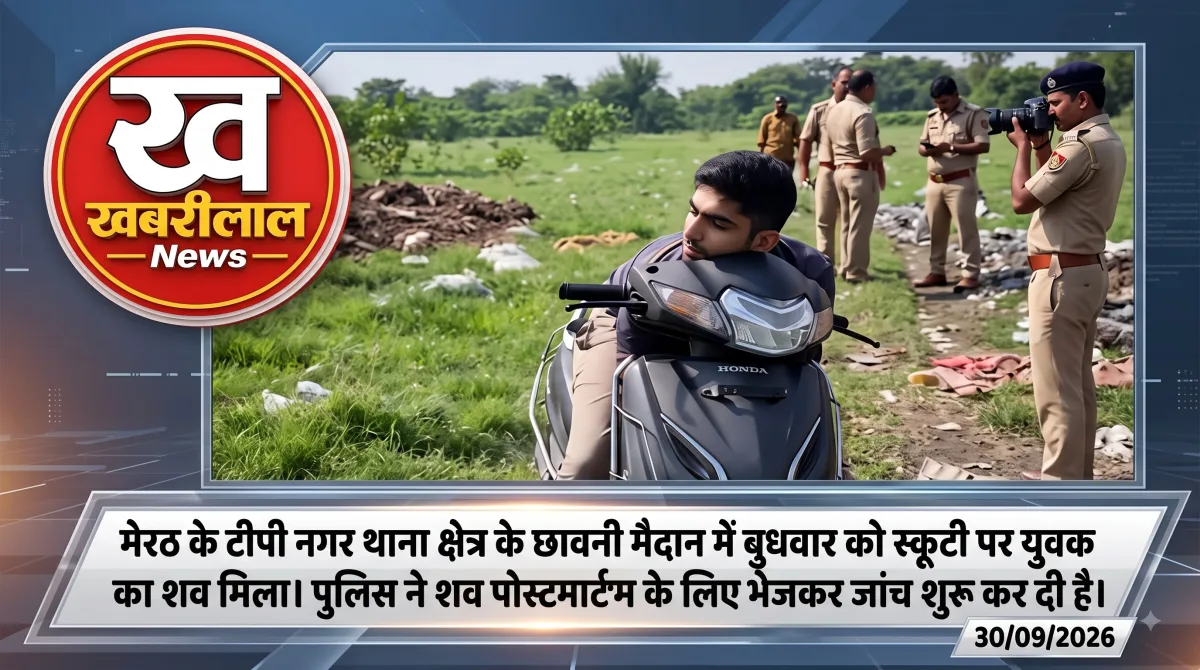 मेरठ के छावनी मैदान में स्कूटी पर मिला युवक का शव: राहगीरों की सूचना पर पहुंची पुलिस, परिजनों ने जताई हत्या की आशंका; पोस्टमार्टम से खुलेगा मौत का राज
 मेरठ नीले ड्रम हत्याकांड में फैसले का दिन: अधिवक्ता बोले- मुस्कान-साहिल ने योजना बनाकर सौरभ की हत्या की, नशीली दवा देकर किया था बेहोश
 नीला ड्रम केस में आज आ सकता है फैसला: 126 पेशियां, 22 गवाह और 13 महीने की सुनवाई; जानिए सौरभ हत्याकांड में उस रात से अब तक कोर्ट में क्या-क्या हुआ
 Meerut Mosque Row: मेरठ में मस्जिद के बाहर हनुमान चालीसा पाठ का ऐलान वापस, पुलिस से नोकझोंक के बाद हिंदू रक्षा दल के दो पदाधिकारी हिरासत में
In this comprehensive, ground-zero investigative report by Khabreelal, we peel back the intricate layers of this ₹5000 crore mega-scam. We will explore how an ostensibly ordinary transporter became the vital artery of a multi-billion rupee syndicate, how ₹372 crores in 'cash' was miraculously fabricated in accounting ledgers, and how the brilliant legal maneuvering by the DGGI and Special Public Prosecutors decimated every defense argument in the courtroom.
\r\n\r\nFollow the Khabreelal News channel on WhatsApp Join › \r\n\r\n
Operation DGGI: Cracking the Code of the ₹5000 Crore Illusion
\r\n\r\nThe genesis of any massive tax fraud invariably begins with seemingly minor manipulations on paper. However, when these manipulations scale into the thousands of crores, they inevitably trigger the alarm bells of premier investigative agencies. The intelligence wing of DGGI Meerut recently flagged a cluster of trading firms. Their turnovers were skyrocketing to astronomical heights, yet their trading patterns and tax-to-turnover ratios displayed glaring, irreconcilable anomalies.
\r\n\r\n\r\n\r\n
Utilizing advanced data analytics and artificial intelligence tools, DGGI sleuths uncovered a sprawling, complex network of firms operating under a 'Single Control' mechanism. The primary modus operandi of these firms was simple yet devastatingly effective: they procured massive wholesale quantities of betel nut (the foundational ingredient for pan masala and gutkha) from states like Assam and Karnataka, and 'clandestinely' supplied it to major pan masala manufacturers in the Delhi-NCR and Western UP belt.
\r\n\r\n\r\n\r\n
In this labyrinth of black money, three primary trading entities emerged as the focal points:
\r\n\r\n\r\n\r\n
- \r\n
- \r\n M/s Kamadgiri Trading Company (Proprietor: Shivam Dwivedi - The Mastermind)\r\n \r\n
- \r\n M/s Ganga Trading Company (Proprietor: Sanjeet Kumar - The Dummy Operator)\r\n \r\n
- \r\n M/s Kamtanathji Traders (Proprietor: Satyam Dwivedi)\r\n \r\n
\r\n\r\n
These entities deployed a highly deceptive 'Accounting Model' designed to exploit the GST framework. Under Indian GST regulations, when a wholesaler sells raw materials to a manufacturer, it is classified as a B2B (Business to Business) transaction. This generates an Input Tax Credit (ITC) trail, making the entire supply chain transparent to the government. The pan masala and gutkha industry in India attracts an exceptionally high tax burden, with GST and mandatory Cess pushing the effective tax rate to a staggering 88%.
\r\n\r\n\r\n\r\n
To evade this crippling taxation, the masterminds engineered a massive cover-up. They began documenting their multi-crore wholesale B2B sales as B2C (Business to Consumer) sales in their official ledgers.
\r\n\r\n\r\n\r\n
The strategic advantage of declaring sales as B2C is sinisterly simple: the seller is not legally mandated to record the end buyer's comprehensive details, PAN number, or GSTIN. Consequently, the truckloads of betel nuts actually being delivered to massive gutkha factories were recorded on paper as retail sales to the "general public." Through this singular manipulation, the true identities of the actual pan masala manufacturers—the gutkha mafia—were completely shielded from the tax department. It was a masterclass in exploiting the GST system.
\r\n\r\n\r\n\r\n
The Paper Labyrinth: The Art of Layering and Shell Companies
\r\n\r\nTo further obfuscate the money trail and confuse investigative agencies, the tax evasion syndicate heavily relied on 'Layering.' In financial forensics, layering involves moving funds or assets through a complex web of transactions to distance them from their illicit source.
\r\n\r\n\r\n\r\n
M/s Kamadgiri Trading would classify its massive betel nut shipments as B2C sales, but paradoxically, "route" them through other sister trading firms within their own syndicate—such as Ganga Trading, Mayan Trading LLP, and Trimurti Impex. These recipient firms would mirror this fraudulent pattern, declaring their subsequent outward supplies as B2C as well. Ganga Trading would further issue invoices to firms like Kamtanathji Traders and Sanchi Trading, which would ultimately report the final transaction as a B2C sale in their books.
\r\n\r\n\r\n\r\n
This multi-layered B2C chain was deliberately fabricated. Its sole objective was to obliterate the audit trail leading to the actual B2B recipients. When goods are theoretically passed through ten different paper companies before allegedly reaching an "ordinary consumer," proving that the raw materials actually ended up in a specific, large-scale pan masala factory becomes a logistical nightmare for the authorities. But the DGGI Meerut officials successfully decoded this entire maze.
\r\n\r\n\r\n\r\n
\r\n\r\n\r\nREAD ALSO: [Gulf Crisis Impact: Government Issues Strict Order—LPG and PNG Connections Can No Longer Be Held Simultaneously, Immediate Surrender of Gas Cylinders Mandatory]\r\n
\r\n\r\n
₹372 Crore 'Cash in Hand': When Diaries and Servers Spilled Dark Secrets
\r\n\r\nIn economic offenses, the most damning evidence is often the meticulous records kept by the criminals themselves. When the DGGI Meerut teams executed synchronized, highly confidential raids across various commercial and residential premises in Delhi-NCR and Meerut on January 30, 2026, the scene that unfolded left even seasoned officers in disbelief.
\r\n\r\n\r\n\r\n
They did not find standard accounting ledgers that matched the GST portal data. Instead, the raiding teams discovered highly sensitive handwritten diaries, secret registers, and dozens of digital devices, including hard drives, laptops, and mobile phones.
\r\n\r\n\r\n\r\n
When forensic cyber experts analyzed the seized servers and digital data of 'M/s Kamadgiri Trading Company,' an impossible and shocking figure flashed on their screens. The account books officially reflected a staggering ₹372 Crores as 'Cash in Hand'! Furthermore, a massive outstanding receivable of ₹395 Crores was shown against a single supplier.
\r\n\r\n\r\n\r\n
These figures were utterly absurd for standard trading operations. During intense interrogation, when officials demanded the proprietor to physically produce this massive cash reserve or account for its whereabouts, his facade crumbled. He confessed that this was not physical currency locked in vaults. It was entirely an 'Accounting Adjustment'—a fabrication designed to balance the fake B2C sales on paper.
\r\n\r\n\r\n\r\n
In reality, the goods had been sold in the black market long ago, and the massive illicit cash had already been siphoned off through hawala or other undeclared channels. However, to survive government audits and balance the books, fake entries were continuously passed with the help of complicit accountants.
\r\n\r\n\r\n\r\n
A critical piece of physical evidence was unearthed on the day of the search. A physical stocktaking of the godowns revealed a massive discrepancy when compared to the paper records. The goods were physically missing from the warehouses but still existed on paper. This stark discrepancy cemented the DGGI’s suspicion into hard evidence: a massive, highly organized tax evasion syndicate was operating in plain sight.
\r\n\r\n\r\n\r\n
The Cast of the Conspiracy: Mastermind Shivam and the Pawn Sanjeet
\r\n\r\nThe script for this ₹5000 crore mega-scam was not written in a vacuum. It had a primary author and Mastermind: Shivam Dwivedi. Investigations and recorded statements conclusively proved that Shivam Dwivedi was not an ordinary trader; he was the central nervous system of the entire syndicate. He was not only the true owner of 'M/s Kamadgiri Trading Company' but the brains, the capital, and the directing force behind 'Ganga Trading' and 'Kamtanathji Traders'. He single-handedly controlled the multi-crore investments, critical business decisions, bank accounts, and daily operations across all three firms.
\r\n\r\n\r\n\r\n
The Role of Sanjeet Kumar (The Dummy Operator): To insulate himself from legal blowback, Shivam incorporated 'Ganga Trading Company' and installed his employee, Sanjeet Kumar, as the nominal (Dummy) proprietor. Sanjeet was essentially a low-level staffer on Shivam’s payroll, lured into taking immense legal risks for a fixed monthly salary and marginal commissions. Acting strictly on Dwivedi’s orders, Sanjeet used his PAN and Aadhaar cards to register the firm. While he was a dummy on paper, digital footprints revealed he was highly active in executing the fraud—generating fake B2C invoices, confirming illegal deals over WhatsApp, and physically collecting black money. In the eyes of the law, a willing dummy operator is as culpable as the chief conspirator.
\r\n\r\n\r\n\r\n
The Exact Toll of Evasion: Following a meticulous audit, the DGGI determined that Shivam Dwivedi alone was jointly and individually liable for direct GST evasion amounting to ₹71,56,98,898/- (Approx. ₹71.5 Crores). His pawn, Sanjeet Kumar, was found actively complicit in a conspiracy resulting in GST evasion of ₹28,75,41,725/- (Approx. ₹28.7 Crores). A comprehensive review of these firms' GST returns revealed they had declared total B2C sales exceeding ₹788 Crores—every single rupee of which was entirely bogus and a critical component of the tax evasion machinery.
\r\n\r\n\r\n\r\n
Transporter Dileep Kumar Jha: The 'Supari Express' Operator Without E-Way Bills
\r\n\r\nA bitter reality of the black economy is that no illicit goods can move from a godown to a factory without the active logistical support of a transporter. To execute a massive tax fraud, corrupt businessmen desperately need a logistics partner willing to transport goods blindly, asking no questions, and demanding no E-way bills.
\r\n\r\nEnter the pivotal character of this narrative—the main accused who recently pleaded for bail before the Meerut Court: Dileep Kumar Jha.
\r\n\r\n\r\n\r\n
A resident of the upscale Rohini Sector-15 in Delhi (Flat No. 72, 3rd Floor, Block-F Pocket-16), Dileep Kumar Jha is the proprietor of 'M/s Ayush Transport'. His logistics fleet boasts 12 heavy commercial vehicles; 8 registered in his name and 4 under his son, Ayush Kumar Jha.
\r\n\r\n\r\n\r\n
According to the DGGI's rigorous investigation, Dileep Jha was not a naive truck operator merely collecting freight charges. He was a formidable, trusted pillar of the ₹5000 crore syndicate.
\r\n\r\n\r\n\r\n
- \r\n
- \r\n Illegal Transport of 3.4 Crore Kg Betel Nut: Investigations established that Jha intentionally and systematically facilitated the massive, clandestine movement of betel nuts without any valid GST tax invoices or E-Way Bills. Tons of raw material destined for pan masala factories sped down the highways, completely invisible on government records.\r\n \r\n
- \r\n The Truth Within the Diaries: When Jha’s residential premises were raided on January 30, officials seized handwritten diaries. The digitization and decoding of these diaries yielded horrifying data. It was revealed that Dileep Jha’s transport company had moved approximately 3.4 crore kilograms of betel nut, valued at ₹1,750 crores, entirely off the books.\r\n \r\n
- \r\n Exposing the ₹5000 Crore Clandestine Sale: As the investigation progressed and more diary pages were decrypted, this ₹1750 crore figure ballooned to a staggering total clandestine sale of ₹5,000/- Crores. Delivering this raw material safely to pan masala manufacturers across Delhi-NCR resulted in a direct, catastrophic loss of approximately ₹250 Crores to the government exchequer.\r\n \r\n
\r\n\r\n
Cyber investigators also successfully recovered deleted WhatsApp voice notes and chat histories from Jha’s mobile phone. These logs placed Dileep Kumar Jha in secret WhatsApp groups named 'Kamadgiri Trading Company' and 'Ganga Trading Company', alongside individuals like 'Ritu Raj' and an article assistant named 'Atul Kumar'. The audio recordings provided damning evidence: Jha was not just loading freight; he was actively involved in routing the contraband safely, discussing ways to evade highway checkpoints, and negotiating the 'Rates' (risk margins/bribes) for executing these illegal transports. In his own recorded statement, Dileep Jha confessed that the maximum volume of his transactions was conducted in cash, strictly without GST invoices or E-way bills.
\r\n\r\n\r\n\r\n
The Courtroom Battle: Defense Pleas vs. The Shield of the Law
\r\n\r\nAs the long arm of the law closed in, Dileep Kumar Jha, mastermind Shivam Dwivedi, Sanjeet Kumar, and Nitin Jain were arrested by the DGGI on February 1, 2026. After their initial bail was rejected by the Special CJM in Meerut on February 12, Jha's legal team escalated the matter, filing the First Bail Application (No. 841 of 2026) before the Additional Sessions Judge, Court No. 01, Meerut.
\r\n\r\n\r\n\r\n
During the bail hearings, the courtroom transformed into an arena of fierce legal sparring. The learned counsel for the defense (accused Dileep Jha) presented several robust arguments seeking bail:
\r\n\r\n\r\n\r\n
- \r\n
- \r\n The "Innocent Transporter" Plea: The defense's primary argument rested on the premise that Dileep Jha was merely a transporter. His sole function was to pick up freight from point A and deliver it to point B. The actual crime of 'Clandestine Supply' and tax evasion was committed by the sellers (Shivam Dwivedi) and the buyers, not the logistics provider.\r\n \r\n
- \r\n Wrongful Application of Section 132(1)(a): The counsel vehemently argued that charging Jha under Section 132(1)(a) of the CGST Act, 2017 (supplying goods without an invoice) was legally flawed. By statutory definition, a transporter is a service provider, not a 'Supplier' of goods.\r\n \r\n
- \r\n No Financial Retainment: The defense highlighted that a severe offense under Section 132(1) requires the accused to have retained a significant financial benefit from the evaded tax. Jha merely collected standard market freight rates; he did not pocket any share of the ₹250 crore illicit profit.\r\n \r\n
- \r\n The Reverse Charge Mechanism (RCM) Technicality: Delving into the nuances of GST law, the defense argued that Goods Transport Agency (GTA) services attract either Nil GST or 5% under the Reverse Charge Mechanism (RCM). Under RCM, the legal liability to pay the tax falls entirely on the recipient of the goods, not the transporter. Even if a liability were somehow attached to Jha, it would only be 5% of his freight charges (estimated at a mere ₹5.3 lakhs). Under the CGST Act, offenses only become non-bailable when the evaded amount exceeds ₹5 crores. Keeping him incarcerated for a ₹5.3 lakh technicality was deemed unjust.\r\n \r\n
- \r\n No Incriminating Recovery: It was pointed out that the January 30 raid at Jha's residence yielded no unaccounted cash (only ₹11,000 for household expenses) and no illegal stock of betel nuts.\r\n \r\n
- \r\n Medical Grounds: Finally, the defense pleaded that the accused suffers from severe ailments including thyroid issues, hypertension, and diabetes. Since the entire case relies on documentary evidence already in the custody of the investigating agency, there was no justification for indefinite incarceration. The defense implored that the alleged offense is bailable and non-cognizable, warranting immediate release.\r\n \r\n
\r\n\r\n
DGGI’s Counterstrike: "This is Not Just Transport; It is Organized Economic Warfare"
\r\n\r\nThe prosecution arrived fully armed to demolish the defense's technical and emotional appeals. Representing the CGST Department (Union of India), Special Public Prosecutor Lakshya Kumar Singh, assisted by Senior Advocate Smt. Vandana Singh, launched a devastating counter-argument in the courtroom.
\r\n\r\n\r\n\r\n
- \r\n
- \r\n Active Connivance and Mens Rea: Special Public Prosecutor Lakshya Kumar Singh argued that Dileep Jha was no innocent bystander unaware of the illicit nature of his cargo. The prosecution presented the audio recordings and WhatsApp transcripts to the judge. These exhibits unequivocally proved that Jha was colluding deeply with the masterminds. He wasn't just discussing freight costs; he was strategizing the logistics of evasion, mapping out safe routes to bypass checkpoints, and fixing 'risk margins' for transporting black-market goods. This definitively established criminal intent (Mens Rea).\r\n \r\n
- \r\n The Statutory Duty of E-way Bills: Advocate Smt. Vandana Singh cited GST statutes, informing the court that it is the primary, legal obligation of a transporter to ensure every consignment loaded onto their trucks is accompanied by a valid E-way bill before it hits the highway. Jha intentionally transported 3.4 crore kg (worth ₹1750 crores) without documentation. While a single trip might be an administrative error, moving 3.4 crore kg without bills is a highly orchestrated criminal conspiracy.\r\n \r\n
- \r\n The 5% Tax Fallacy: The prosecution dismantled the defense's RCM argument. They clarified that the 5% argument only applies to the transport of generic raw materials. This specific syndicate was the critical supply artery for pan masala and gutkha manufacturing—an industry where the final product attracts an 88% tax rate (including Cess). Jha was the primary enabler of this massive 88% tax evasion.\r\n \r\n
- \r\n Corroborative Statements: Statements from co-accused Shivam Dwivedi and witness Ritu Raj indisputably established that trade was being conducted purely in cash, without any Purchase Orders. Jha’s fleet picked up goods from Shivam’s secret godowns and delivered them directly to pan masala factories, entirely off the books.\r\n \r\n
- \r\n Statements Not Under Duress: The department countered the claim of coerced confessions, noting that independent witnesses (Manish Bansal and Akram Khan) were present during the arrest. Furthermore, the accused had personally verified the entries in his own handwritten diaries. Crying "duress" after the fact was merely a desperate legal escape hatch.\r\n \r\n
\r\n\r\n
Landmark Supreme Court Precedents: 'White-Collar Crimes Are a Cancer to the Economy'
\r\n\r\nDuring the intense bail hearings, several landmark judgments passed by the Hon'ble Supreme Court of India and various High Courts regarding Economic Offences were heavily cited. Additional Sessions Judge Mohd. Aslam Siddiqui made these legal precedents the bedrock of his final order, showcasing exactly how the Indian judiciary views massive tax evasion:
\r\n\r\n\r\n\r\n
- \r\n
- \r\n Ram Narayan Popli vs. Central Bureau of Investigation (2003): In this historic judgment, the Supreme Court stated that "economic offenses are not committed in a sudden heat of passion, but are executed with a cool, calculating mind and deliberate design." These 'white-collar crimes' shatter public trust and inflict deep, irreparable damage to the nation's economic fabric. They must be treated as national economic disasters.\r\n \r\n
- \r\n Nimmagadda Prasad vs. C.B.I., Hyderabad (2013): The apex court noted that economic offenses involve massive losses of 'Public Money'. The ₹250 crores evaded in this case should have been utilized for building schools, hospitals, and national defense. Instead, it lined the pockets of a mafia. This constitutes a severe threat to the financial health and security of the country.\r\n \r\n
- \r\n Y.S. Jagan Mohan Reddy vs. CBI (2013): Regarding the granting of bail, the Supreme Court directed that since economic offenses involve the massive looting of public funds, courts must ensure that granting bail does not jeopardize the ongoing investigation, nor provide the accused an opportunity to tamper with evidence or intimidate witnesses.\r\n \r\n
- \r\n Union of India vs. Padam Narayan Aggarwal (2008) & Section 108 of the Customs Act: Relying on this precedent, the court clarified that interrogations conducted and statements recorded by a Gazetted Officer (such as a DGGI official) hold immense evidentiary value. The officer's duty is to extract the truth, and magisterial intervention is not required at that stage. An accused cannot simply retract a statement later by falsely claiming it was taken under pressure.\r\n \r\n
- \r\n Govind Aggarwal vs. State of U.P. (2020 - Allahabad High Court): Discussing the Power to Arrest (Section 69 & 132 of the CGST Act), the High Court clarified that while arrests should not be made on a whim, if an individual is involved in "evasion of a huge amount of tax," is a "promoter of fake invoices," and there is "direct documentary evidence of active involvement in tax evasion" on record, then their arrest is entirely justified, legal, and necessary.\r\n \r\n
- \r\n Tejas Pravin Dugad vs. Union of India (Bombay High Court): This judgment drew the boldest line in the sand. The Bombay High Court strongly observed that "white-collar crimes are far more serious than traditional crimes like murder or dacoity." A dacoit robs a single house, but a tax evasion syndicate robs the entire nation and its future generations. Granting anticipatory or regular bail in such grave offenses severely damages the public image of the judiciary.\r\n \r\n
\r\n\r\n
The Final Strike of the Gavel: "Releasing the Accused is Entirely Unjustified"
\r\n\r\nAfter patiently hearing the extensive arguments from both sides, examining the legal precedents, and meticulously analyzing the concrete evidence on record (the seized diaries, WhatsApp chats, voice notes, digital data, and corroborative statements), Additional Sessions Judge Mohd. Aslam Siddiqui delivered his highly anticipated verdict.
\r\n\r\n\r\n\r\n
In his detailed analysis, the Honorable Court recorded the following definitive conclusions:
\r\n\r\n\r\n\r\n
- \r\n
- \r\n Concrete Evidence Exists: The accused, Dileep Kumar Jha, intentionally and systematically delivered massive quantities of betel nut to various pan masala factories without GST invoices and E-way bills. Ironclad digital and documentary proof is present in the case file.\r\n \r\n
- \r\n The Scale is Colossal: The clandestine sale of ₹5000 crores and the resulting GST evasion of ₹250 crores is not a mere accounting error; it is a highly organized mega-scam.\r\n \r\n
- \r\n Duress Argument Rejected: The defense's plea that statements were extracted under coercion is unacceptable at this stage, as the handwritten diaries and digital footprints independently and conclusively corroborate the accused's 'Active Connivance'.\r\n \r\n
- \r\n Risk of Tampering: This is a grave 'economic offense' of massive proportions. The accused is part of a powerful, well-funded syndicate. The court recognized a substantial probability that if released on bail, the accused would intimidate witnesses and destroy whatever remaining evidence exists.\r\n \r\n
\r\n\r\n
The Final Verdict: "Considering all these facts in totality, the extreme gravity of the offense, and in light of the stringent principles laid down by the Hon'ble Supreme Court regarding economic offenses, it would not be appropriate to release the accused on bail at this stage. Hence, the first bail application of the applicant/accused Dileep Kumar Jha (under Sections 132(1)(a), 132(1)(b), and 132(1)(i) of the CGST Act, 2017) is hereby rejected." (Dated: 10.03.2026)
\r\n\r\n\r\n\r\n
The Far-Reaching Implications of this Historic Verdict
\r\n\r\nAcross Uttar Pradesh (specifically the Western UP belt encompassing Meerut, Ghaziabad, Noida, and Muzaffarnagar) and the Delhi-NCR region, a sprawling, illicit market for pan masala, gutkha, and tobacco products operates in the shadows. The government continuously tightens tax rates to discourage consumption, but greedy cartels, aided by complicit Chartered Accountants and corrupt middlemen, perpetually find new loopholes.
\r\n\r\n\r\n\r\n
The unholy alliance between 'Kamadgiri Trading Company' and transporter Dileep Jha in this specific case proves that modern tax evasion is no longer confined to manipulating papers in air-conditioned offices. It requires the establishment of a full-fledged 'Parallel Economy' and a highly coordinated 'Dark Supply Chain' on the ground.
\r\n\r\n\r\n\r\n
The stringent order passed by the Meerut Sessions Court serves as a massive, blazing warning sign to all transporters, logistics company owners, dummy proprietors, and directors of shell companies who become cogs in the tax evasion machinery for a few extra rupees in 'freight' or 'commission'. Under Section 132 of the CGST Act, the grip of investigative agencies and the judiciary has tightened so severely that hollow excuses like "I am just a transporter," "I didn't know what was in the boxes," or "I am just a salaried employee" will no longer hold up in court for even a minute.
\r\n\r\n\r\n\r\n
This brilliantly executed, precise, and courageous operation by the DGGI Meerut Zonal Unit, coupled with the uncompromising stance of the judiciary, guarantees that the only true destination for these white-collar criminals—those who play with the nation's economy and swallow the public's tax money—is behind the iron bars of a prison cell.
\r\n\r\n\r\n\r\n
What Happens Next? With the primary logistical head of the network now firmly denied bail and languishing in jail, investigative agencies are preparing to cast their nets wider. The DGGI's radar is now undeniably locked onto the "big fish." An imminent, massive crackdown is expected against the actual, big-brand pan masala and gutkha 'Manufacturers'—the shadowy figures whose secret godowns received this ₹5000 crore bounty of undocumented betel nuts overnight. The sleep of several prominent gutkha barons has undoubtedly been shattered.
\r\n\r\n\r\n\r\n
Disclaimer: This detailed news report and legal analysis is based on a rigorous study of press releases available in the public domain, the arguments presented in court by Special Public Prosecutor (CGST) Lakshya Kumar Singh and the defense counsel, and the valid, public court order passed by the Hon'ble Additional Sessions Judge, Meerut on March 10, 2026 (J.O. Code No. UP-6209). The primary objective of this report is to educate and spread public awareness regarding economic offenses and judicial processes.
















































































































Sabse pehle comment karne wale banein.